


Relief from the constant ringing in your ears, a condition known as tinnitus, involves identifying the underlying cause, using sound-based therapies, and adopting evidence-based management strategies like Cognitive Behavioral Therapy (CBT).
While there is no universal cure, a combination of medical treatments, lifestyle adjustments, and coping techniques can significantly reduce the impact of tinnitus on your daily life.
This condition is remarkably common, affecting an estimated 10% to 15% of adults, which translates to over 25 million Americans experiencing some form of tinnitus.
For many, it’s a minor annoyance, but for others, it can be a debilitating condition that affects sleep, concentration, and emotional well-being.
Read on to discover a comprehensive, evidence-based roadmap that navigates the complexities of tinnitus, from understanding its origins to exploring the most current and effective strategies for finding quiet and reclaiming your quality of life.
In This Article
What is Tinnitus and Why Am I Hearing This Ringing in My Ears?
Tinnitus is the perception of sound in one or both ears, or in the head, when no external sound source is present.
It is a symptom, not a disease itself, often stemming from an underlying condition such as age-related hearing loss, an ear injury, or a circulatory system disorder.
The sound you hear is a “phantom” noise generated by your own auditory system.
For many, tinnitus manifests as a persistent ringing in the ears. However, the sound can take many forms.
People with tinnitus describe hearing a wide variety of phantom noises, including:
- Buzzing
- Roaring
- Clicking
- Hissing
- Humming
- Whistling
- Shrieking
The sound may be constant or intermittent, vary in pitch from a low roar to a high squeal, and can range in volume from barely noticeable to overwhelmingly loud.
In severe cases, the noise can interfere with your ability to concentrate or hear actual external sounds, significantly impacting your daily life.
According to the National Institute on Deafness and Other Communication Disorders (NIDCD), roughly 10% of the U.S. adult population has experienced tinnitus lasting at least five minutes in the past year.
What Are the Different Types of Tinnitus?
Understanding the type of tinnitus you have is a crucial first step toward diagnosis and management.
Tinnitus is broadly categorized into two main types: subjective and objective, with a specific subtype known as pulsatile tinnitus.
Subjective Tinnitus
This is the most common form of tinnitus, accounting for over 99% of cases.
With subjective tinnitus, you are the only person who can hear the sound. Its origins are typically neurological or sensorineural, meaning it relates to the nerves involved in hearing.
The causes are vast, ranging from hearing loss to medication side effects.
The phantom sounds are the result of the brain trying to compensate for a lack of auditory input from the ear, creating its own noise.
Objective Tinnitus
Objective tinnitus is extremely rare. In this case, the sound you hear is a real noise created by structures inside your body, near your ear.
During an examination, a doctor may also be able to hear this sound using a stethoscope. The causes are often mechanical and can include:
- Blood vessel (vascular) issues: Turbulent blood flow in arteries and veins near the ear.
- Muscle spasms: Spasms of tiny muscles in the middle ear can create a clicking or crackling sound.
- Inner ear bone conditions: Problems with the bones of the middle ear, like otosclerosis.
Pulsatile Tinnitus
A specific form of objective tinnitus, pulsatile tinnitus is characterized by a rhythmic pulsing or whooshing sound that is often in time with your heartbeat.
You might notice it more when you’re lying down or in a quiet room.
While it can be harmless, pulsatile tinnitus warrants a prompt medical evaluation, as it can sometimes be a sign of a more serious underlying condition, such as:
- High blood pressure (hypertension)
- Atherosclerosis (hardening of the arteries)
- Head and neck tumors
- Abnormalities in blood vessels or arteries
If you experience any new sound that pulses in sync with your heartbeat, it is essential to see a doctor as soon as possible for a thorough evaluation.
What Causes the Ringing in your Ears?
Tinnitus is not a condition but a symptom of something else.
The ringing in ears often arises from damage to the delicate hair cells of the inner ear (cochlea).
These cells convert sound waves into electrical signals for the brain. When damaged, they can “leak”, random electrical impulses, which the brain interprets as sound.
A number of health conditions can cause or worsen tinnitus, though in many cases, an exact cause is never found.
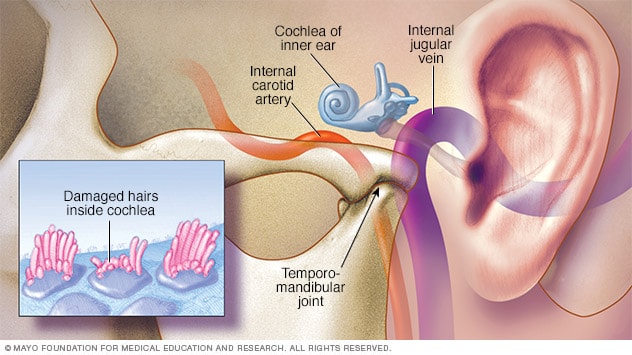
Common Causes of Tinnitus
- Hearing Loss: This is the most common cause. As we age (presbycusis) or are exposed to loud noise, the nerve fibers in our ears decline, leading to hearing loss and often tinnitus. In fact, Mayo Clinic notes that about 90% of people with tinnitus have some level of noise-induced hearing loss.
- Loud Noise Exposure: A one-time exposure to an extremely loud sound (like an explosion or concert) or long-term exposure to loud noises (from heavy machinery, firearms, or loud music) can damage the inner ear and cause tinnitus.
- Earwax Blockage: A buildup of earwax can block the ear canal, changing the pressure in your ear and causing tinnitus symptoms. This is often a reversible cause.
- Ear Bone Changes: Stiffening of the bones in your middle ear (otosclerosis), an abnormal bone growth that tends to run in families, can affect hearing and cause tinnitus.
Medical Conditions Linked to Tinnitus
A wide range of health issues can trigger or exacerbate the ringing in ears:
- Head or Neck Injuries: Trauma to the head or neck can affect the inner ear, hearing nerves, or brain function related to hearing. Such injuries often cause tinnitus in only one ear.
- Meniere’s Disease: Tinnitus can be an early indicator of this inner ear disorder, which is caused by abnormal fluid pressure and also leads to vertigo and hearing loss.
- TMJ Disorders: Problems with the temporomandibular joint (TMJ), the joint on each side of your head where your jawbone meets your skull, can cause tinnitus.
- Acoustic Neuroma: This noncancerous (benign) tumor develops on the cranial nerve that runs from your brain to your inner ear, causing tinnitus, typically in one ear, along with hearing loss and balance issues.
- Blood Vessel Disorders: Conditions like high blood pressure, atherosclerosis, or malformed capillaries can cause blood to move through your veins and arteries with more force, leading to pulsatile tinnitus.
- Chronic Conditions: Diabetes, thyroid problems, migraines, anemia, and autoimmune disorders like rheumatoid arthritis and lupus have all been associated with tinnitus.
Medications That Can Cause Tinnitus (Ototoxicity)
Certain medications are known to be ototoxic, meaning they can damage the ear and cause tinnitus as a side effect. Often, the noise disappears when the drug is stopped.
According to Harvard Health, these include:
- Nonsteroidal anti-inflammatory drugs (NSAIDs), such as aspirin, ibuprofen (Advil, Motrin), and naproxen (Aleve) in high doses.
- Certain antibiotics, including aminoglycosides (like gentamicin) and macrolides (like erythromycin).
- Cancer drugs, such as cisplatin and vincristine.
- Water pills (diuretics), like furosemide (Lasix), especially when given intravenously.
- Antimalarial drugs, such as chloroquine and quinine.
- Certain antidepressants.
If you suspect a medication is causing your tinnitus, do not stop taking it without first consulting your doctor.
Who Is at Risk for Developing Tinnitus?
Anyone can experience tinnitus, but certain factors significantly increase your risk.
A large-scale 2025 study published in Nature confirmed that hearing health is the primary risk factor, but other elements play a crucial role, especially in how severe and bothersome the tinnitus becomes.
Key Risk Factors:
- Loud Noise Exposure: This is one of the most significant and preventable risk factors. People who work in noisy environments (factory workers, construction workers, musicians, soldiers) or engage in loud recreational activities are at particularly high risk.
- Age: The prevalence of tinnitus increases with age. As you get older, the number of functioning nerve fibers in your ears naturally declines, often leading to hearing loss and tinnitus.
- Sex: Men are more likely to experience tinnitus. However, some research, including the UK Biobank study, suggests that when women do have tinnitus, they may report greater distress from it.
- Tobacco and Alcohol Use: Smokers have a higher risk of developing tinnitus. Excessive alcohol consumption can also affect blood flow and contribute to the condition.
- Certain Health Problems: Obesity, cardiovascular problems (like high blood pressure), a history of arthritis, or a previous head injury all increase your risk of tinnitus.
- Psychological Factors: Recent research highlights a strong link between tinnitus severity and mental health. Factors like mood disorders, neuroticism, and poor sleep are strong predictors of how distressing tinnitus will be.
How Do Doctors Diagnose the Cause of Ringing in Ears?
Diagnosing tinnitus involves a comprehensive evaluation to identify any underlying, treatable conditions.
Since tinnitus is a symptom, the primary goal is to find the root cause.
The process typically starts with your primary care physician, who may refer you to an otolaryngologist (ENT) or an audiologist.
The Diagnostic Process
- Medical History and Symptom Description: Your doctor will ask detailed questions about your tinnitus. Be prepared to describe:
- The type of sound you hear (ringing, buzzing, clicking, pulsing).
- Whether it’s in one ear (unilateral) or both (bilateral).
- If it’s constant or intermittent.
- How it impacts your daily life, sleep, and concentration.
- Your medical history, including medications and exposure to loud noises.
- Physical Examination: A thorough examination of your head, neck, and ears will be performed. For suspected pulsatile tinnitus, your doctor may listen for sounds around your neck and ear with a stethoscope. They may also ask you to move your eyes, clench your jaw, or move your neck to see if the sound changes, which can point to a structural or musculoskeletal cause.
- Hearing (Audiological) Exam: This is a critical step. A comprehensive audiogram conducted by an audiologist will measure your hearing sensitivity across different frequencies. This test can identify any underlying hearing loss, which is strongly associated with tinnitus.
- Imaging Tests: Imaging is not always necessary but is recommended for specific types of tinnitus. According to guidelines from the American Academy of Family Physicians (AAFP):
- MRI with and without contrast is the preferred test for unilateral (one-sided), non-pulsatile tinnitus to rule out an acoustic neuroma or other lesions.
- CT angiography (CTA) or MR angiography (MRA) is recommended for pulsatile tinnitus to evaluate for vascular abnormalities, tumors, or issues with blood vessels.
- Lab Tests: Blood tests may be ordered to check for conditions that can be linked to tinnitus, such as anemia, thyroid problems, vitamin deficiencies, or autoimmune disorders.
In many cases, a specific cause cannot be identified. This is known as idiopathic tinnitus. Even without a clear cause, there are many effective strategies to manage the symptom and reduce its impact on your life.
How Can I Stop the Ringing in My Ears? Established Treatments
While there is no single “cure” that eliminates all forms of tinnitus, there are numerous highly effective, evidence-based treatments that can significantly reduce the perception and burden of the noise.
The goal of these therapies is to help you manage the symptom, making it less noticeable and less bothersome.
Treatment is often multi-faceted and tailored to your specific needs.
Treating the Underlying Cause
The first step is always to address any identifiable cause:
- Earwax Removal: A simple, immediate fix if blockage is the issue.
- Changing Medications: If a drug is suspected, your doctor may switch you to an alternative.
- Treating a Vascular Condition: For pulsatile tinnitus, addressing high blood pressure or other blood vessel issues with medication or surgery can resolve the sound.
Sound-Based Therapies
Sound therapies work by enriching your auditory environment to make the tinnitus less prominent.
This can provide both immediate relief and long-term habituation.
- Hearing Aids: For the vast majority of people with tinnitus and hearing loss, hearing aids are a cornerstone of treatment. By amplifying external sounds, they help mask the tinnitus and stimulate the auditory pathways, reducing the brain’s focus on the internal noise.
- Sound Masking Devices: These devices, worn in the ear like hearing aids or used as tabletop units, produce a continuous, low-level white noise or other pleasant sounds (like nature sounds). This helps to cover up, or “mask”, the tinnitus, making it less intrusive, especially in quiet environments or when trying to sleep.
- White Noise Machines & Apps: Using a fan, an air conditioner, a white noise machine, or a smartphone app at night can be a simple yet effective way to mask tinnitus and improve sleep.
Behavioral Therapies and Counseling
These therapies are considered the gold standard for managing chronic, bothersome tinnitus.
They don’t eliminate the sound but change your reaction to it, breaking the vicious cycle of tinnitus and stress.
Cognitive Behavioral Therapy (CBT)
CBT is one of the most effective and well-researched treatments for tinnitus distress.
It is a form of psychotherapy that helps you identify and change negative thought patterns and behaviors associated with your tinnitus.
Instead of viewing the sound as a threat, you learn to reframe it as a neutral signal, reducing the anxiety and frustration it causes.
CBT for tinnitus often involves relaxation techniques, mindfulness, and developing coping skills to make the sound less of a focus in your life.
Tinnitus Retraining Therapy (TRT)
TRT is a specialized program that combines low-level sound therapy with directive counseling.
The goal is habituation—training your brain to reclassify the tinnitus sound as unimportant and consciously ignore it.
It involves wearing a sound generator while receiving one-on-one counseling over a period of 1-2 years.
The sound generator helps to reduce the contrast between the tinnitus and background silence, while counseling helps to demystify the condition and remove negative associations.
Lifestyle and Home Remedies
- Stress Management: Stress is a major aggravator of tinnitus. Techniques like biofeedback, mindfulness meditation, deep breathing exercises, and yoga can help manage your body’s stress response and, in turn, reduce the perceived loudness of your tinnitus.
- Limit Alcohol, Caffeine, and Nicotine: These substances can affect blood flow and nerve excitability, potentially making tinnitus worse for some individuals. Try reducing your intake to see if it helps.
- Regular Exercise: Physical activity improves circulation, reduces stress, and promotes overall well-being, which can have a positive effect on tinnitus.
What Are the Newest Tinnitus Treatments for 2026 and Beyond?
The field of tinnitus research is rapidly evolving, with several innovative treatments showing significant promise.
These cutting-edge therapies move beyond simple masking and aim to address the underlying neurological changes that cause tinnitus.
Bimodal Neuromodulation
This is one of the most exciting recent developments.
Bimodal neuromodulation works by stimulating two different nerve pathways simultaneously—typically the auditory system (with sound) and the somatosensory system (with touch).
The goal is to promote neuroplasticity and retrain the brain to ignore the phantom sound.
- Lenire®: This FDA-approved device is a leading example. It combines sound played through headphones with gentle electrical stimulation on the tongue via a small mouthpiece. A pivotal clinical trial (TENT-A3) published in Nature Communications showed that this bimodal approach provided clinically significant improvements in tinnitus symptoms beyond what was achieved with sound therapy alone.
Brain Stimulation Techniques
Researchers are exploring non-invasive ways to modulate the brain activity associated with tinnitus.
- Repetitive Transcranial Magnetic Stimulation (rTMS): This technique uses magnetic fields to stimulate or inhibit specific areas of the brain. Low-frequency rTMS is used to try to calm the hyperactivity in the brain’s auditory cortex that is linked to tinnitus. A 2025 meta-analysis published in Frontiers in Neuroscience found that rTMS has some efficacy for short-term relief, but more research is needed to determine optimal protocols and long-term benefits.
- Transcranial Direct Current Stimulation (tDCS): This involves applying a weak electrical current to the scalp to alter neuronal excitability. Some studies suggest that combining tDCS with counseling may enhance treatment effects, especially for patients with co-occurring anxiety.
Cochlear Implants
For individuals with severe to profound hearing loss and bothersome tinnitus, a cochlear implant can be a life-changing option.
While primarily designed to restore hearing, studies have consistently shown a significant secondary benefit of tinnitus suppression.
A large prospective study published in Nature Medicine found that cochlear implantation reduced tinnitus in 90% of patients with pre-surgical tinnitus, with a 58% reduction in loudness and a 44% reduction in handicap after two years.
The implant works by directly stimulating the auditory nerve, providing the brain with structured sound input that overrides the chaotic signals of tinnitus.
This is a major surgical procedure and is reserved for those who meet the criteria for severe hearing loss.
| Treatment Approach | How It Works | Best Suited For | Evidence Level |
|---|---|---|---|
| Cognitive Behavioral Therapy (CBT) | Changes negative thoughts and emotional responses to tinnitus. | Anyone with bothersome tinnitus, especially with anxiety/depression. | High (Strongly Recommended) |
| Hearing Aids | Amplify external sounds to mask tinnitus and stimulate the auditory system. | Individuals with tinnitus and any degree of hearing loss. | High (Strongly Recommended) |
| Bimodal Neuromodulation (e.g., Lenire) | Combines sound and touch (tongue) stimulation to promote brain plasticity. | Individuals with moderate to severe bothersome tinnitus. | Moderate to High (FDA Approved) |
| Repetitive TMS (rTMS) | Uses magnetic fields to modulate hyperactivity in the brain’s auditory cortex. | Chronic, non-pulsatile tinnitus. Still considered experimental. | Low to Moderate (Mixed Results) |
| Cochlear Implants | Electrically stimulates the auditory nerve, bypassing damaged parts of the ear. | Individuals with severe-to-profound hearing loss and tinnitus. | High (for this specific population) |
How Does Tinnitus Affect Quality of Life and Mental Health?
The impact of the constant ringing in ears extends far beyond just an auditory annoyance.
For many, tinnitus can significantly degrade quality of life and is strongly linked to a range of psychological and emotional challenges.
The relentless nature of the sound can trigger a “fight-or-flight” response, leading to a vicious cycle where stress makes the tinnitus seem louder, and the louder tinnitus causes more stress.
Common complications associated with chronic tinnitus include:
- Sleep Problems: The quiet of the night can make tinnitus more noticeable, leading to difficulty falling asleep and staying asleep (insomnia).
- Trouble Concentrating: The persistent noise can make it hard to focus on tasks at work, school, or even during conversations.
- Anxiety and Irritability: The inability to escape the sound can lead to feelings of frustration, anger, and constant anxiety. Studies have shown a strong association between bothersome tinnitus and anxiety symptoms.
- Depression: Living with a chronic, intrusive condition can lead to feelings of hopelessness and depression. Research indicates that the more severe the tinnitus, the higher the likelihood of co-occurring depressive symptoms.
- Social Isolation: Difficulty hearing in noisy environments and the emotional toll of the condition can cause individuals to withdraw from social activities.
It is crucial to address these linked conditions as part of a comprehensive tinnitus management plan.
Treating anxiety, depression, or insomnia may not eliminate the tinnitus sound, but it can dramatically improve your ability to cope with it and enhance your overall well-being.
How Can I Prevent Tinnitus or Stop It from Getting Worse?
While not all tinnitus can be prevented, especially cases related to aging or illness, the most common cause—noise-induced hearing loss—is largely preventable.
Protecting your hearing is the single most important step you can take.
Actionable Prevention Strategies:
- Use Hearing Protection: This is non-negotiable. Always wear earplugs, earmuffs, or custom-fitted devices when you are in loud environments. This includes concerts, sporting events, using power tools, mowing the lawn, or using firearms.
- Turn Down the Volume: Be mindful of the volume on your personal audio devices. A good rule of thumb is the 60/60 rule: listen at no more than 60% of the maximum volume for no more than 60 minutes at a time.
- Take Noise Breaks: If you are in a loud environment for an extended period, step away to a quieter area periodically to give your ears a rest.
- Take Care of Your Cardiovascular Health: A healthy heart and blood vessels are good for your ears. Regular exercise, a balanced diet, and managing blood pressure can help prevent tinnitus linked to circulatory problems.
- Have Your Hearing Checked: Regular hearing tests by an audiologist can detect early signs of hearing loss, allowing you to take protective measures before tinnitus develops or worsens.
Medical Disclaimer: This article is for informational purposes only and does not constitute medical advice. The information contained herein is not a substitute for, and should never be relied upon for, professional medical advice. Always seek the advice of your physician or other qualified health provider with any questions you may have regarding a medical condition.
Frequently Asked Questions About Tinnitus
1. Can tinnitus go away on its own?
Yes, tinnitus can sometimes go away on its own, especially if it’s temporary and caused by a single exposure to loud noise or a reversible issue like an earwax blockage. However, chronic tinnitus, which lasts more than six months, is less likely to disappear completely without intervention.
2. Is ringing in one ear more serious?
Ringing in one ear (unilateral tinnitus) can sometimes be a sign of a more specific medical issue, such as Meniere’s disease, a head injury, or an acoustic neuroma. It always warrants a thorough medical evaluation by a doctor to rule out underlying causes.
3. Can stress cause tinnitus?
While stress doesn’t directly cause tinnitus, it is a major contributing factor that can make existing tinnitus much worse. High stress levels can trigger the body’s “fight-or-flight” response, making you more aware and agitated by the sound, creating a vicious cycle.
4. Will tinnitus make me go deaf?
Tinnitus itself does not cause deafness. However, it is very often a symptom of underlying hearing loss. The presence of tinnitus is a strong indicator that you should have your hearing evaluated, as addressing the hearing loss is a key step in managing the tinnitus.
5. Are there any vitamins or supplements that cure tinnitus?
There is little to no high-quality scientific evidence to support the use of supplements like Ginkgo biloba, melatonin, or zinc as a cure for tinnitus. While some people report anecdotal benefits, controlled studies have not shown them to be more effective than a placebo.
6. What should I do if my tinnitus suddenly gets worse?
If your tinnitus suddenly changes in volume, pitch, or becomes significantly more intrusive, you should consult your doctor or audiologist. They can help identify potential new triggers, such as a new medication, increased stress, or changes in your hearing.
7. Can diet affect my tinnitus?
For some individuals, certain dietary elements like high salt intake, caffeine, alcohol, or MSG can temporarily worsen tinnitus symptoms. Keeping a food diary can help you identify if any specific foods or drinks are triggers for you.
8. What is the difference between tinnitus and a hearing aid ringing?
Tinnitus is an internal sound, while a ringing hearing aid is typically due to feedback (a high-pitched whistle). Feedback occurs when amplified sound from the hearing aid leaks out of the ear canal and is picked up again by the microphone. This can usually be fixed by an audiologist.
Conclusion
Living with a constant ringing in your ears can be a challenging and isolating experience, but it’s important to remember that you are not alone and that effective help is available.
While a universal cure remains on the horizon, the landscape of tinnitus management has never been more promising.
From foundational treatments like hearing aids and sound therapy to the proven effectiveness of Cognitive Behavioral Therapy in changing your relationship with the sound, you have powerful tools at your disposal.
Furthermore, exciting advancements like bimodal neuromodulation and a deeper understanding of the brain’s role in tinnitus are paving the way for even more effective, personalized therapies.
The key is to take a proactive, informed approach. Start by seeking a comprehensive diagnosis to rule out underlying causes, protect your hearing from further damage, and work with a qualified healthcare professional to build a management plan that is right for you.
By combining medical treatments with stress management and healthy lifestyle choices, you can significantly reduce the burden of tinnitus, quiet the noise, and reclaim your peace and quality of life.
Have you found a strategy that helps with your tinnitus? Share your experience in the comments below to help others on their journey.